What is each shelf actually making?
Every retailer knows what its stores sell. Almost none can tell you what one shelf — one row, one slot — is earning. Here's the problem of retail space management, and what we built for one supermarket chain.
Every store runs on space management — the discipline of deciding where each product goes on a shelf, how many of each, and at what height, so that every inch of floor and shelf pulls its weight. Head office plans it. Someone else, down on the store floor, builds it.
Those are rarely the same person, and often not even in the same building. Between the people who plan a store and the people who stock it sits a long chain of hands. The plan goes down. What actually happened on the shelf comes back up slowly, if it comes back at all.
For one store, that gap is manageable. A good manager walks the floor and knows it by heart. For a hundred stores, it isn't. Every location carries slightly different stock, sells to a slightly different neighbourhood, and drifts from the plan in its own way. A bestseller runs out. A facing gets cut in a rush. A competitor's product quietly takes the good spot at eye level.
Retailers are already good at sales, and that's the part that hides the problem. They can forecast, compare stores, and tell you which broad areas of a shop run hot — the entrance, the checkout, fresh food. What they usually can't tell you is what one specific shelf is making. Or one row. Or one slot. The numbers are sharp at the level of the store and the category. They go blurry at the level of the exact spot where a product actually sits.
And the exact spot is where most of the work lives. Move a product up a shelf, give it another facing, swap two neighbours — that is the daily craft of retail space management. It's very hard to do well when you can't see, store by store, what any given position is actually earning.
It's not a glamorous problem. It's an expensive one, and it sits in a corner of retail almost nobody pays attention to. That's exactly why we went after it.
What we built
We're Deepwork Labs. We build software, and we started here by helping one large supermarket chain in Southeast Asia with a single piece of this. The deeper we got, the clearer it became that the boring, overlooked question — what is really on each shelf, and what is it making — was where the difficulty actually lived.
So we built a retail space-management system we call Retail Intelligence. The idea is simple. You take a photo of a shelf. The software reads the whole thing — every product, where it sits, how it's laid out row by row, how many facings each one has — and turns it into a clean, structured map of that shelf. Then it lines that map up against sales. A person on the team reviews what the software found and confirms it.
Every store runs on space management — the discipline of deciding where each product goes on a shelf, how many of each, and at what height, so that every inch of floor and shelf pulls its weight.
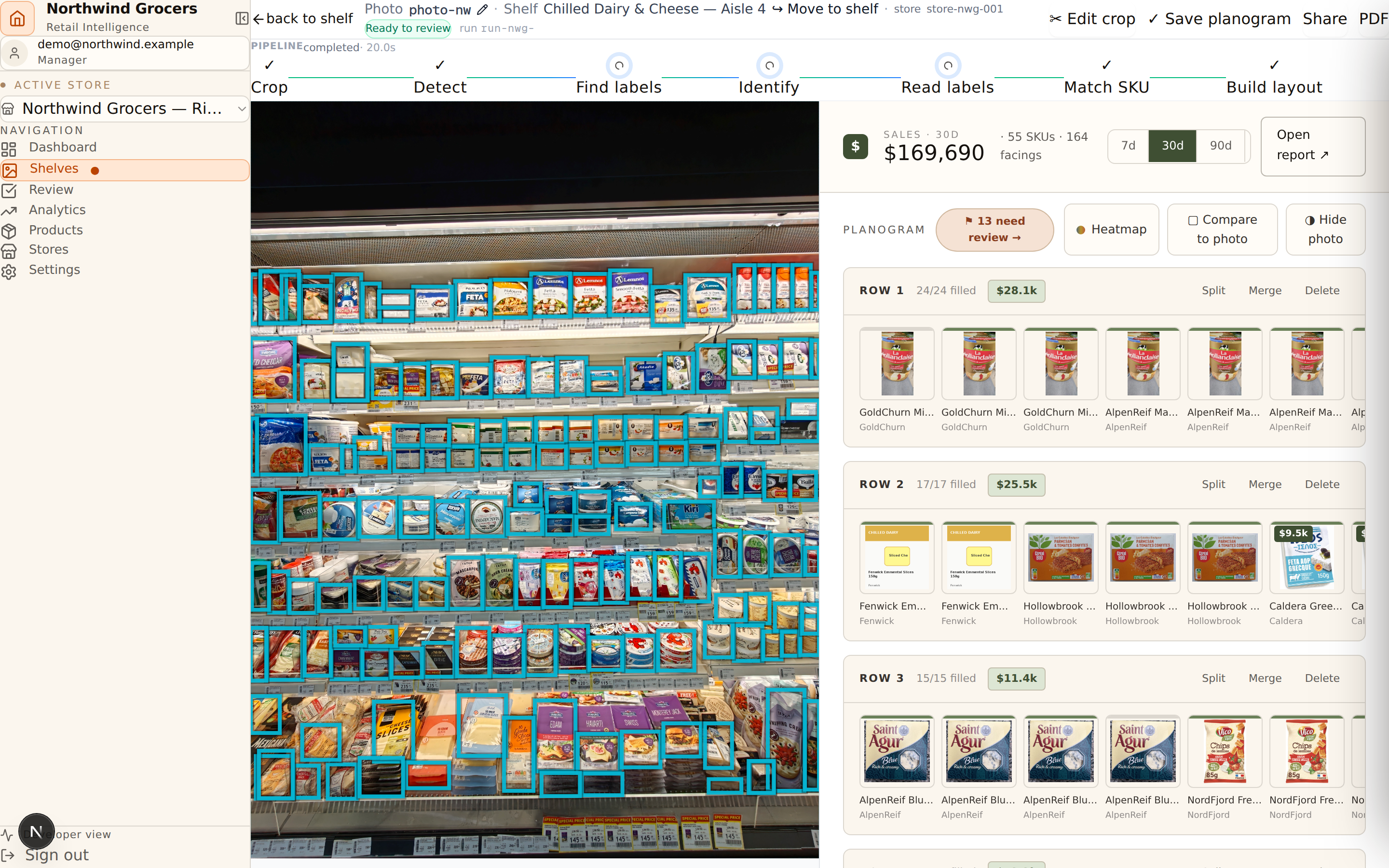
The result isn't only a picture of what's on the shelf. It's a picture of what each part of the shelf is making.
What it changed for one chain
This didn't hand the chain we worked with data they'd never had. They already knew their sales. What changed was the resolution.
Before, they could see that a store was doing well, that a category was growing, that one area pulled harder than another — the same view most retailers have. Now they can see, down to the row and the slot, what a single shelf is actually earning, store by store. The kind of question they could once only ask about a whole department, they can now ask about one stretch of shelf.
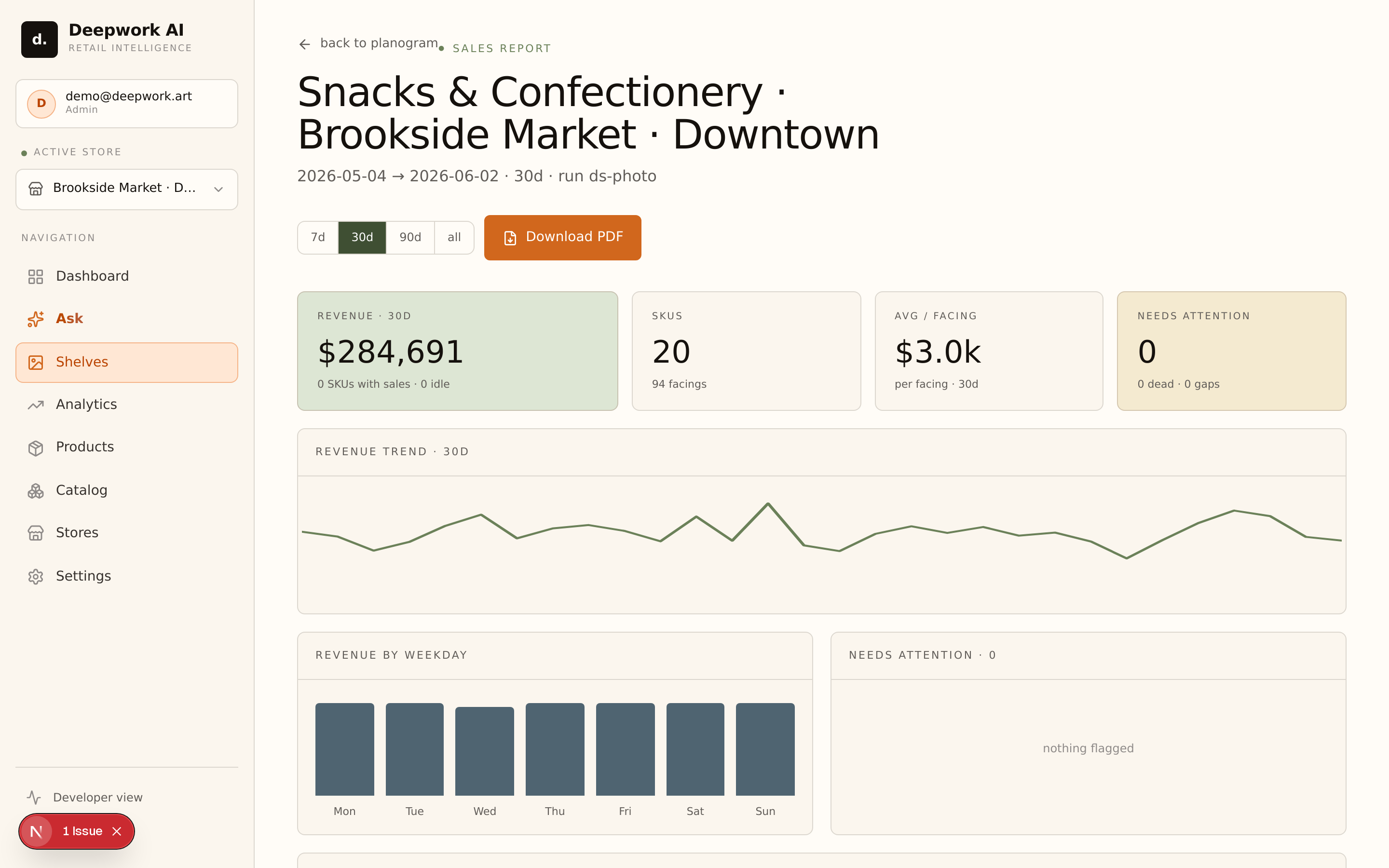
And once a shelf is just data, the story it has been hiding falls out on its own — which products are climbing and deserve more room, and which are quietly fading and should be cut back.
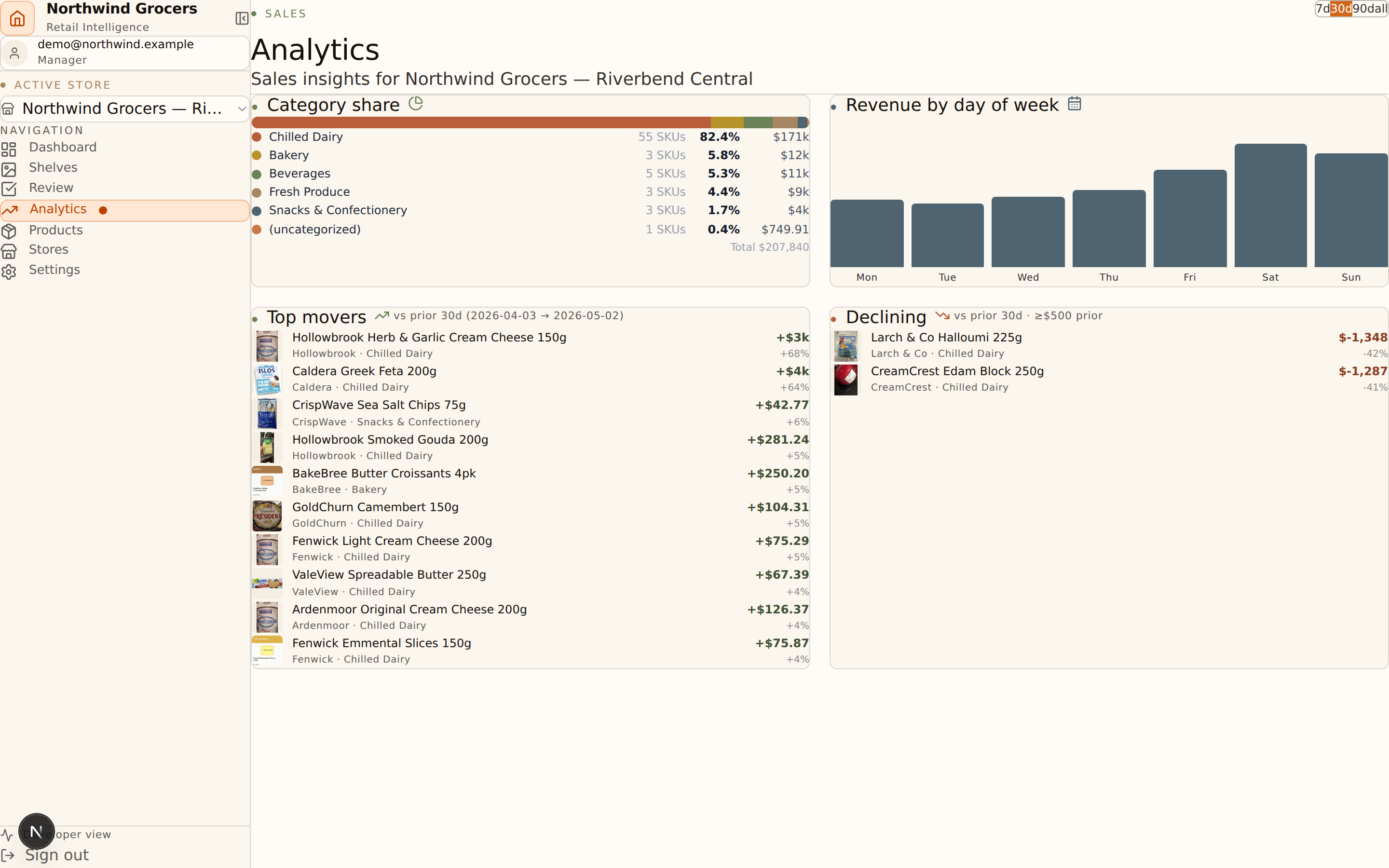
That's the whole shift: from knowing roughly where the money is made to seeing exactly where it's made.
How it works, and what it doesn't do
A note on what this is and isn't. It isn't lights-out automation. The software does the slow, repetitive reading — finding products on a dense shelf, matching them to the catalogue, rebuilding the layout, comparing it against the plan. People review and approve. And when the software isn't sure, it's built to say so and hand the call to a person rather than guess. That one design choice — knowing when it doesn't know — is a big part of why the people using it trust what comes back.
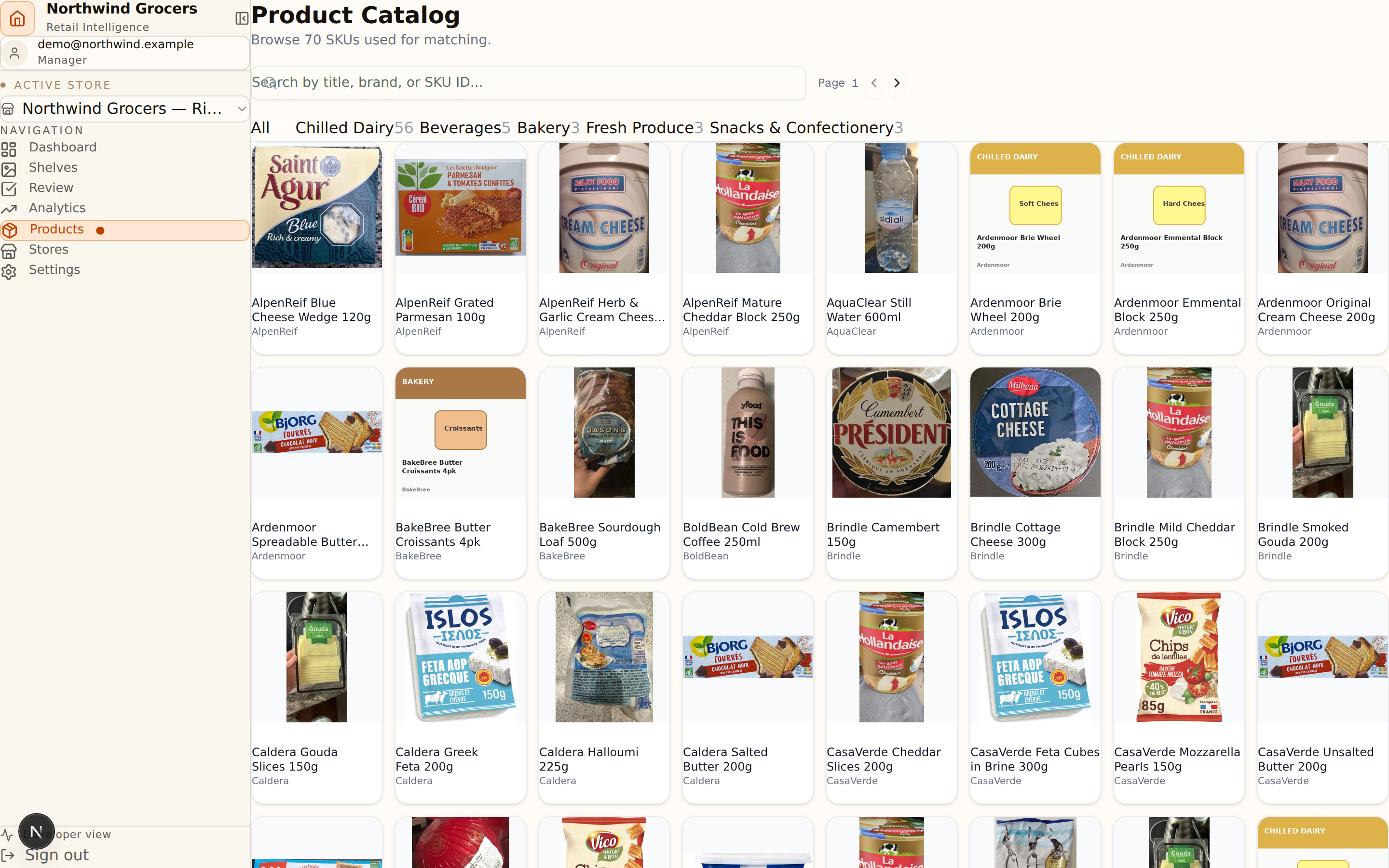
Matching is the quiet hard part. Two products can look almost identical from three feet away, so the system pairs what a product looks like with the text printed on its pack, checked against the store's own catalogue.
The timing here is part of why this is suddenly possible. The open vision models this kind of work leans on have come a very long way, very fast: YOLO for spotting every product on a packed shelf, Segment Anything for cutting each one cleanly out of the photo, and the newer "locate anything" grounding models that are getting unreasonably good at finding a specific thing in a messy scene. Two years ago this would have been a research project. Now it runs on a shelf.
The bigger picture is simple. Physical retail is starting to move from estimating what its shelves are doing to actually seeing it — the same shift online stores made years ago.
Curious what this looks like on your own shelves?
If you run stores, or supply them — DM me, and I'll walk you through the demo.
The client stays anonymous. Every dashboard shown above runs on a fictional store built to be shown publicly; real product packshots carry real third-party brands, but the retailer, names, and sales figures are invented.